Top 5 reasons to eat Whole Grains:
- Many studies support the connection between increased whole grain consumption and a reduced risk of coronary heart disease. The #1 cause of death in the US is heart disease.
- The complex carbohydrates in whole grains give you a steady supply of natural fuel to provide sustained energy.
- Whole grains are a natural source of valuable antioxidants, as well as vitamins (B1, B2, B3, B6), vitamin E, magnesium, iron and phytochemicals which, working together, help reduce the risk of some cancers.
- Research has shown that persons with higher intakes of fiber, as found in whole grains, have a lower risk of developing type 2 diabetes.
- The high fiber content of whole grains can help persons feel full with fewer calories and therefore, be beneficial in weight management.
Whole Grains food list:
– Breads, Pastas, and Cereals that are made with 100% whole grain.
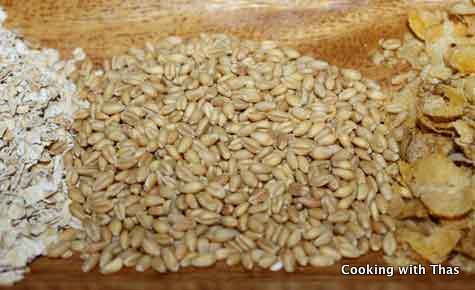
– Brown rice, Wild rice, Barley, Corn, Popcorn, Buckwheat, Oatmeal.
When buying whole grains food, carefully check the food labels for the word “WHOLE GRAINS”. Reading food labels isn’t as easy as you think. Here’s how to decipher nutrition labels so you can separate fact from marketing. Link
Do you feel dizzy when you enter the bread aisle seeing all different kinds of bread? Let me help you with this:
White bread: is made from wheat flour from which the bran and often the germ have been removed and this makes it less nutritious and unhealthy. “The whiter the bread, the quicker you’re dead!“ – an old but wise saying.
Whole Wheat bread: The word “whole” refers to the fact that all of the grain (bran, germ, and endosperm) is used and nothing is lost in the process of making the flour, which is used for making the bread.
Multi-Grain bread: Multi-Grain bread is made with multiple grains such as oats, cracked wheat, buckwheat, barley, millet and flax.
Difference between Whole-Wheat and Whole-Grain:
In whole-wheat flour, the grains go through a refining process that will remove some of the nutritional value from the end product. While, whole-grain flour doesn’t go through this process and hence retains all the nutrients.
Why “Multi-Grain Whole Grain” bread is better than “Whole WHEAT” bread?
Multi-grain bread has different grains added to it which provides you with greater range of benefits. But, when you buy multi-grain bread, it must also say “100% whole grains” somewhere on the package, otherwise they may have refined grains added to it, which completely makes it unhealthy.